WORK EXHIBITIONS
In the park, at the Work Exhibitions Area, artisans showcase their medieval techniques. You can watch up close as traditional materials are transformed into jewelry, knives, tablet-woven bands, and drinking horns. The masters are happy to answer curious questions. If you take a liking to any of the items, don’t worry—most of them are also for sale.
The Work Exhibitions Area also offers a glimpse into everyday medieval life. At the time, most tools and supplies were made by hand. Rumor has it that merchants from the southern shores of the Baltic Sea are also planning a journey to Turku to present the products of their homelands.
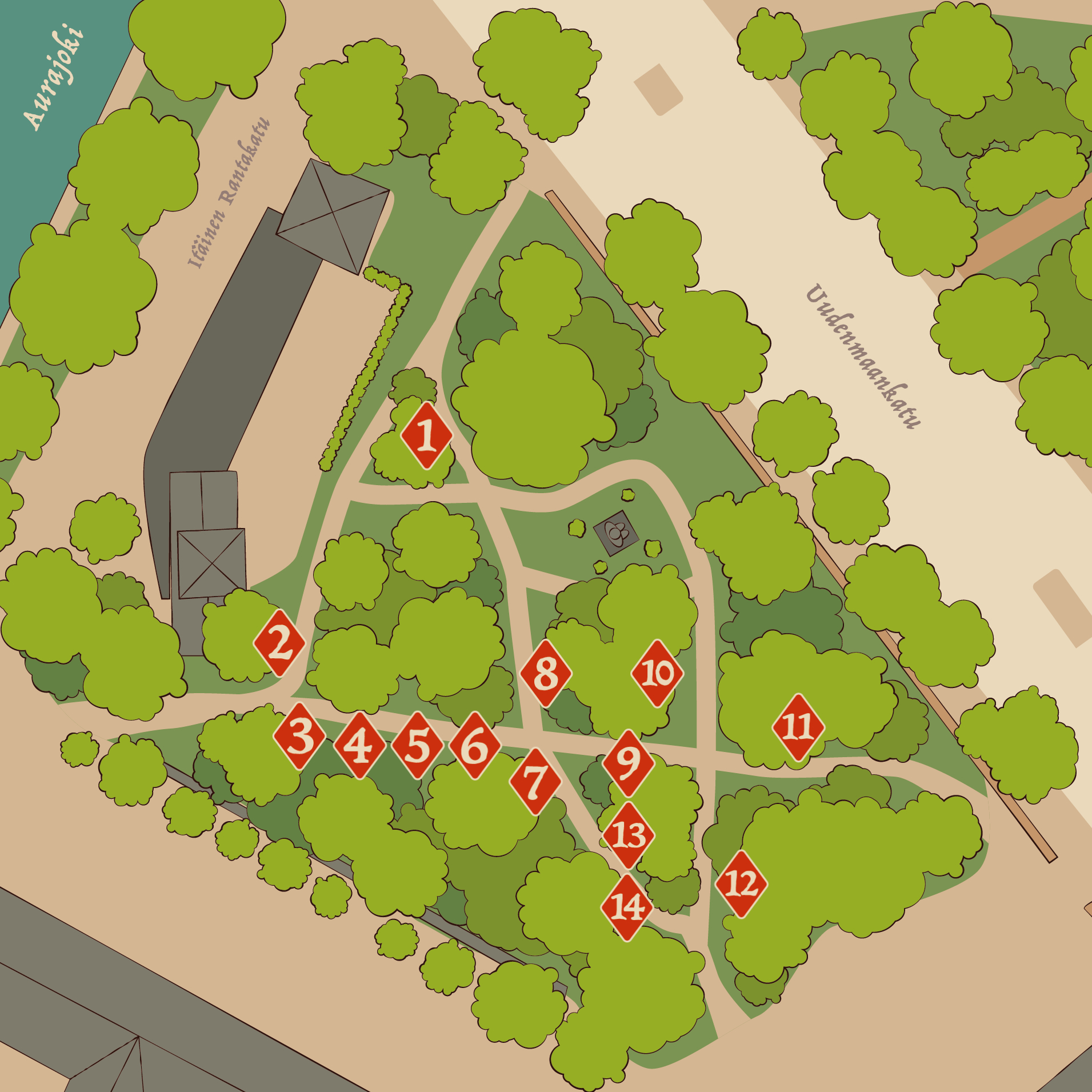
A map of the work display area and more information about artisans:
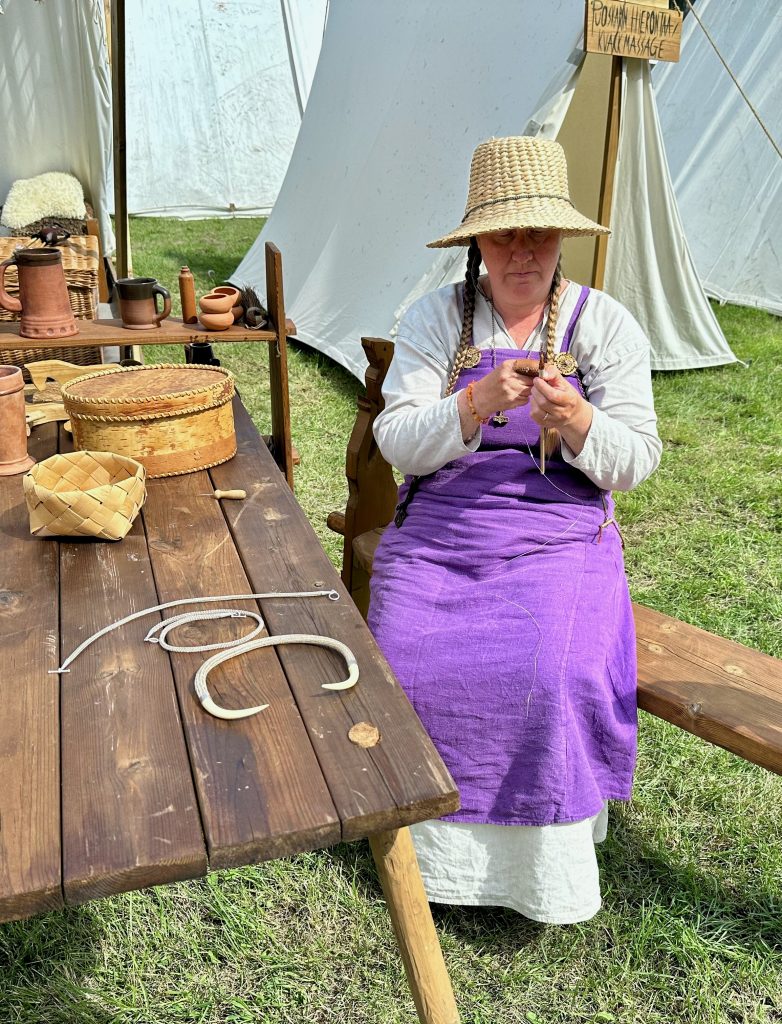
The artisans of AkkaNaakka draw their inspiration from antiquity, myths, the paths of tradition, and the magic of nature. From wool, iron, leather, bronze, bone, and wood, as well as horns and scales, they create beautiful objects and everyday items that enrich both the daily life and special occasions of modern people.
We bring events to life with period-appropriate costumes and preserve our ancestors’ craftsmanship through live demonstrations. Come visit our tent, linger by our side, and witness the skills of our forebears, remembering the legacy of our grandmothers.
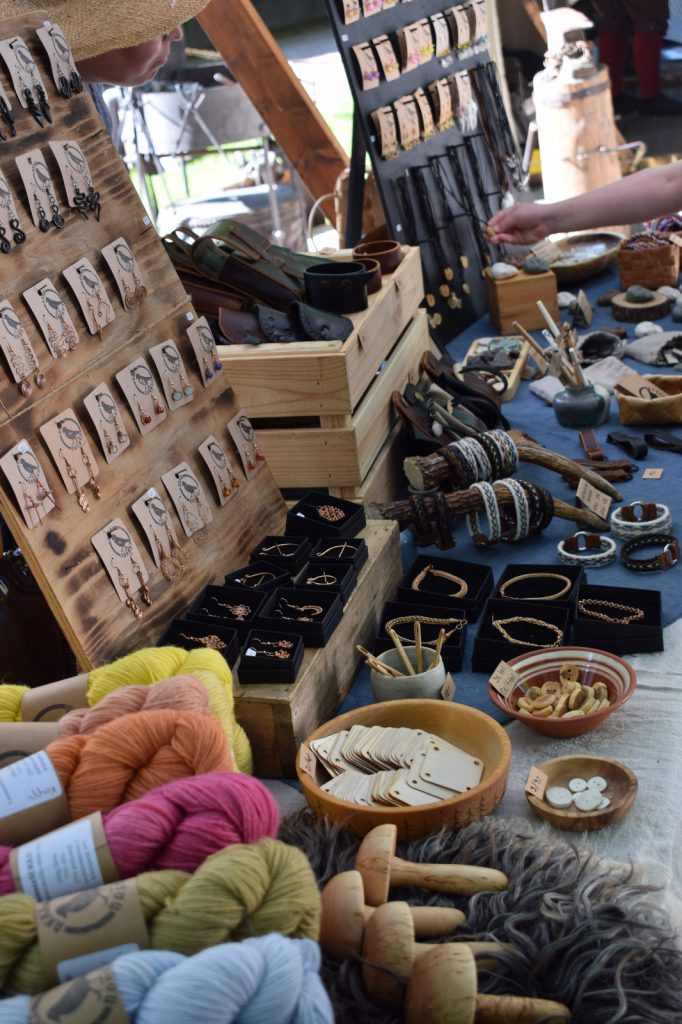
Bones, bone material, skulls, bone jewelry and nalbinding needles, ancient necklaces and earrings, plant-dyed yarns, nalbound items, tablet woven and inkle bands, and the tools needed to make them, etc. Various demonstrations depending on the occasion.
The tanning trade was also important in the Middle Ages. The traditional, natural methods we use today were already in use by our profession back then. Suomen perinnenahkurit ry was founded to preserve this tradition, share expertise, and continue to raise awareness of the work of traditional tanners.
At our workshop, we process various types of hides, starting with cleaning, and carry out the tanning process and finishing. We showcase the uses of different leathers, both historically and in modern times. Since the hides being processed cannot be left completely untouched for long periods, there is practically always something happening at our workshop.
Central Ostrobothnian bone setting
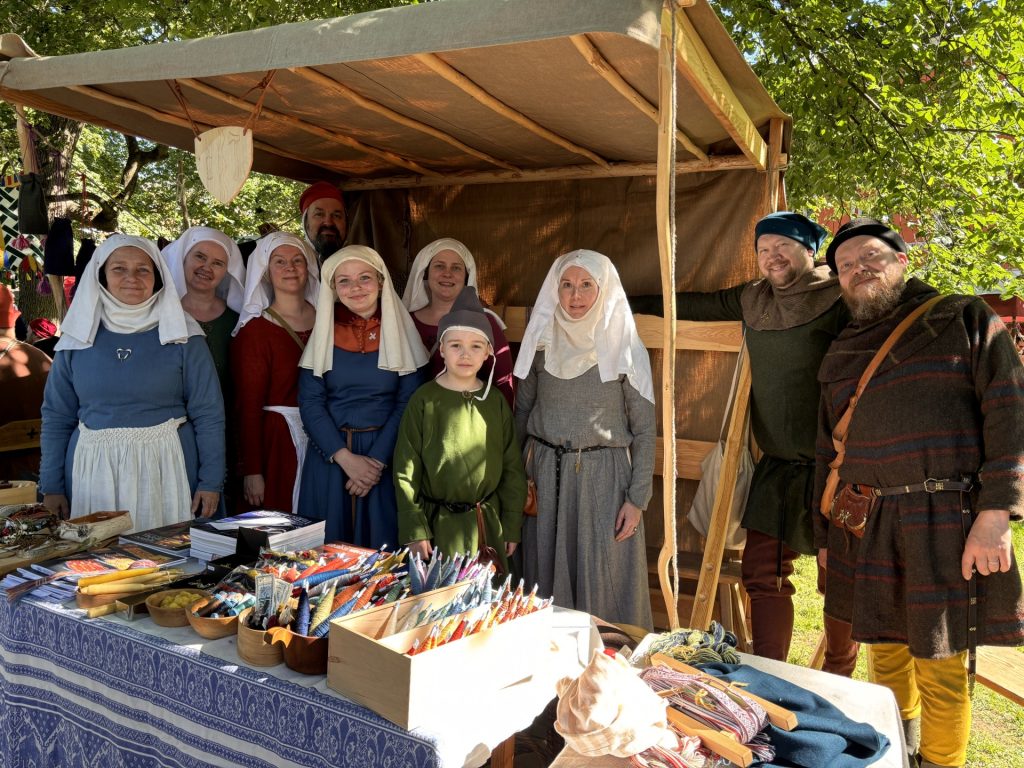
Iloinen joutsen is a historical reenactment group specializing in the Middle Ages. We recreate the daily lives of Finnish artisans, that is those living in Eastland of Sweden, in the late 14th century. Our goal is to bring to life the daily life, crafts, and trades of the Middle Ages. Our reenactments are based on historical sources. In addition to the 14th century, our members reenact the Early Middle Ages, that is the Late Iron Age in Finland.
We bring the work of the association’s artisans, from blacksmithing and goldsmithing to textiles, to Medieval Turku. In addition to finished works, we offer both literature and materials. Weather and schedule permitting, we hold demonstrations, and the public also has the opportunity to try their hand at tablet woven band, for example. Or come by our booth to ask about bringing history to life based on sources, or about clothing from the Middle Ages or the Early Middle Ages, that is the Late Iron Age.
A Treasure from the Iron Age: silver, bronze, and historical jewelry-making techniques
Come watch a jeweler at work as metal is shaped into beauty while honoring tradition. Corvus Crafts specializes in historically inspired, handcrafted jewelry and artisanal items. During the demonstration, you’ll see how magnificent King’s chains, Viking knit, and the splendid bronze ornaments of ancient costumes are created using just fingers and pliers.
Discover a luxurious Byzantine chain, where the links weave into a labyrinthine pattern. The roots of this technique stretch back as far as 2,300 years. Also on display is Viking knit: an ancient wire-weaving technique in which metal wire is weaved into a tube around a rod. The workshop also produces spiral decorations from the Iron Age and the Crusades. Spirals were used to decorate clothing, and by combining spirals, patterns were created to give garments a striking finish. Come experience the thrill of history and see how ancient treasures come to life!
Presenting calligraphy and tools using medieval scripts, along with guidance for the public on trying their hand at writing at our station. We’ll also provide information about calligraphy courses and opportunities to pursue the hobby.
Founded in Turku at the end of the last century, the heritage association Maalarikilta (Painter guild) traces its roots back at least to the early 17th century, and perhaps even further. It could be said that the tradition of painting has existed for tens of thousands of years, so it is no wonder that the profession contains a wealth of interesting knowledge and skills that have been passed down from generation to generation and have proven to be useful and sustainable practices for future generations as well.
The association therefore aims to preserve the proven knowledge and skills characteristic of professional painting from all eras. At the same time, this helps correct misconceptions that once surrounded the profession, as well as erroneous assumptions created, for example, by modern do-it-yourself advertising. The guild’s members are primarily professionals in the field, including painters, contractors, professionals in the paint industry and trade, teachers in the field, or others working in painting. However, guild members are not required to have work or educational certificates, and family members, retirees, and others who still value the skills required in painting work are also welcome to join.
The association organizes social gatherings, meetings, recreational and educational trips for its members. Over the years, members have also participated in various volunteer projects and work demonstrations. The association collaborates with a number of different organizations, such as Rakennusperinteen Ystävät ry ja TAO, Turun Ammattiopistosäätiö. With the support of employer and employee organizations, “official” openings of the exterior painting season have been held in the Turku region for many springs, as well as the painters’ harvest festival in the fall, marking the end of the exterior painting season.
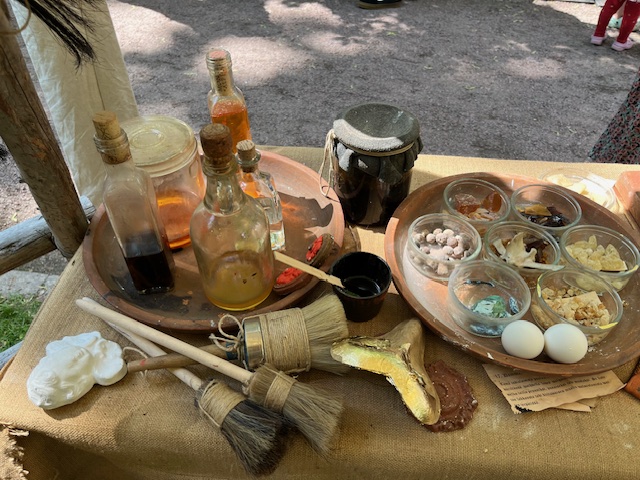
Over the years, live demonstrations at the event have also become a guild tradition. Once again this year, the guild’s painting workshop will illustrate in various ways the tasks of painters who lived in the Middle Ages. There, apprentices, journeymen, and masters will be busy with all sorts of activities. We’ll be making authentic lime paint, animal glue-based chalk paint, egg tempera and oil paint, milk paint, blood paint, spirit varnish, copal varnish, and more. Apprentices are taught how to grind paint and prepare brushes, as well as how to make paste and simmer glues, etc. The workshop also demonstrates the slaking of lime and the painting or gilding of decorations using a variety of different methods.
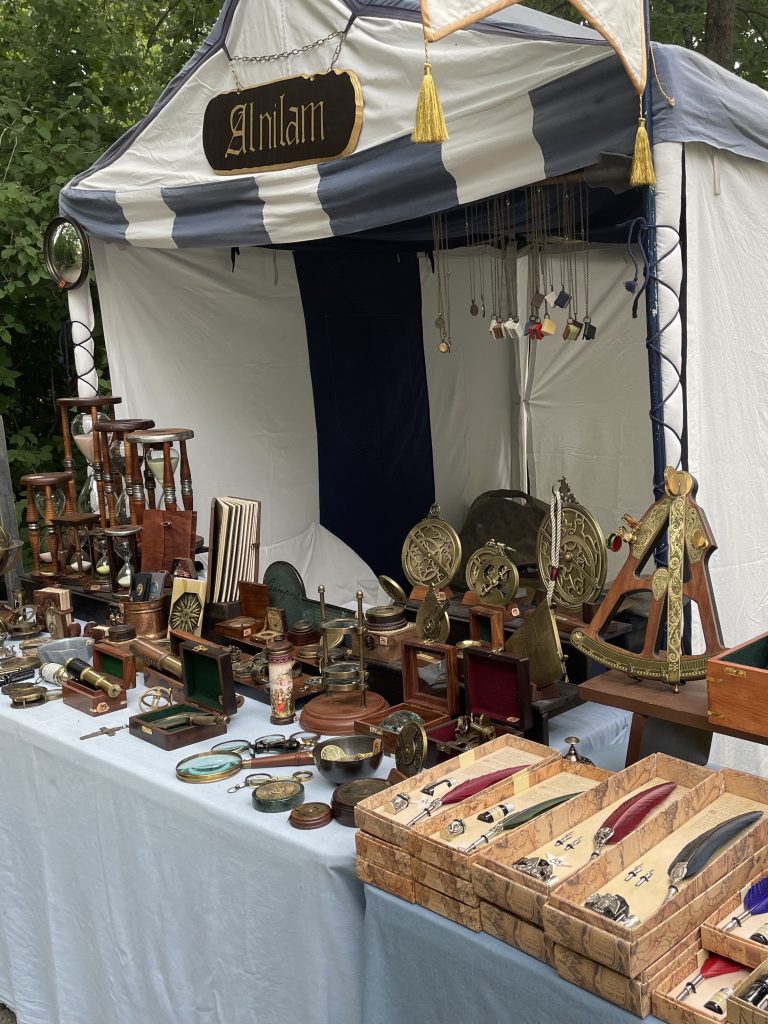
Medieval astronomy was based on the worldview of the ancient Greek philosophers, particularly Aristotle, in which all celestial bodies revolved around the Earth. The orbits of the planets were already known in the 4th century BCE, and scholars knew that the Earth was round. Complex mechanical devices, such as armillary spheres and astrolabes, were used for measurements. Time was measured using sundials and hourglasses. In the 13th century, when the compass had already begun to be used in Europe, portable sundials—known as travel clocks—were made, which were combinations of a sundial and a compass. Seafarers also measured time with hourglasses. Lensmakers crafted precise magnifying glasses. We present medieval timekeeping and astronomy, as well as the instruments and devices used by the astronomers and seafarers of the era. We also provide guidance on how to use these devices. You can purchase these devices at our booth, as well as quill pens and notebooks.
Blacksmiths from three forges will once again gather at the Old Great Square to showcase their forging skills. From the field forge emerge everything from small everyday items to jewelry to dangle around your neck. Throughout the event, we’ll be forging items of various shapes and sizes, both for our own use and to fulfill customer orders.
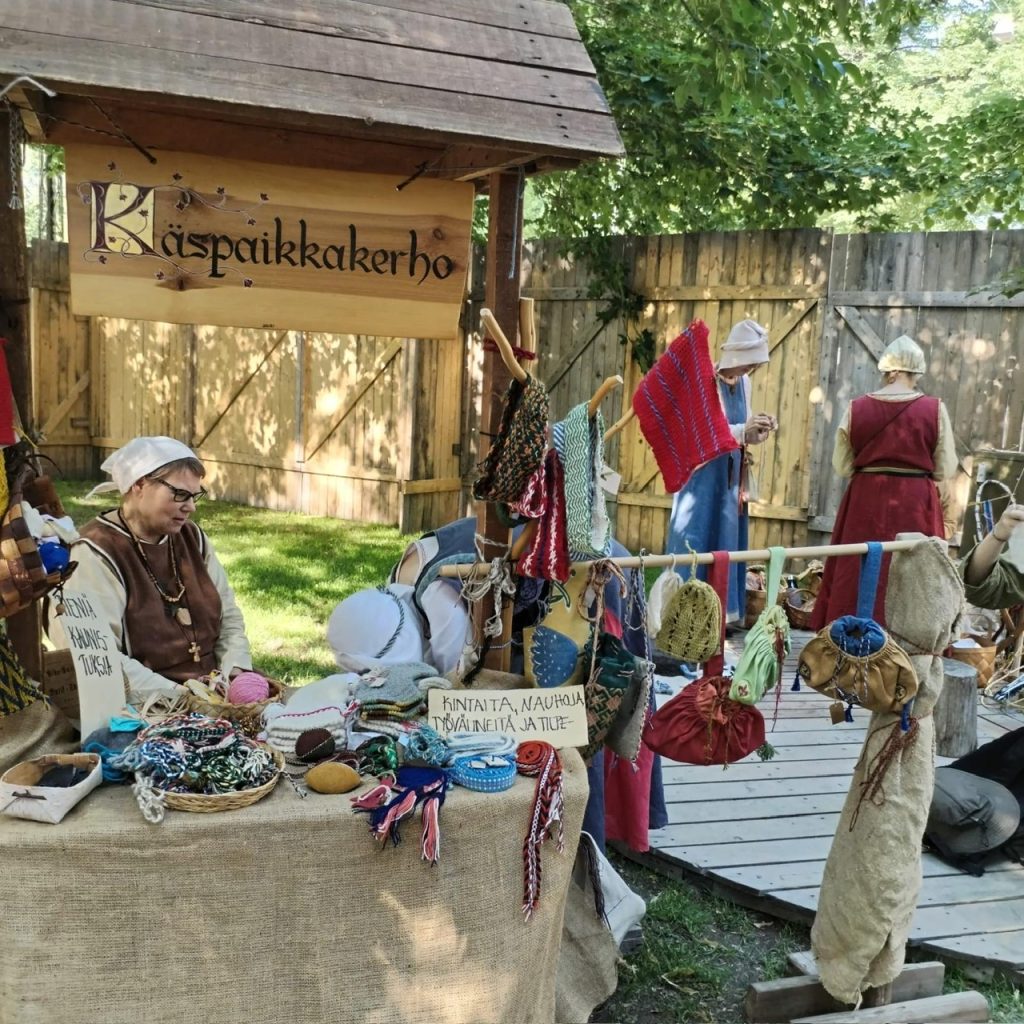
Käspaikkakerho has been active for over 35 years and is part of Turun Karjala-Seura’s activities. The club engages in various traditional crafts related to Karelian culture, such as nalbinding mittens and traditional knit garments, as well as working in the reverse stockinette stitch.
At the market, club members make various types of ribbons, such as tablet-woven bands and finger braid, nalbinding mittens, card wool, spin it on a spindle, and weave nets and sprang.
The Medieval Society Unikankare will showcase its activities, including crafts (tablet weaving, nalbinding, embroidery, etc.) and board games, and will tell interested visitors about the society’s activities and everything involved in medieval reenactment.
Ocarina painting workshop for fee
Forging of nails and arrowheads. Forging of smaller items upon request.